
 EN
EN

Commercial greenhouse operations face a persistent financial challenge that directly impacts profitability: peak demand electricity charges. During critical periods of lighting, climate control, and irrigation, energy consumption spikes can trigger utility rate structures that add thousands of dollars to monthly operating costs. For growers operating on thin margins, these peak charges represent a significant drain on resources that could otherwise be invested in crop development, automation, or expansion. The solution lies in a strategic approach to energy management that decouples consumption patterns from grid demand timing, and industrial battery storage systems have emerged as the most effective tool to achieve this decoupling.
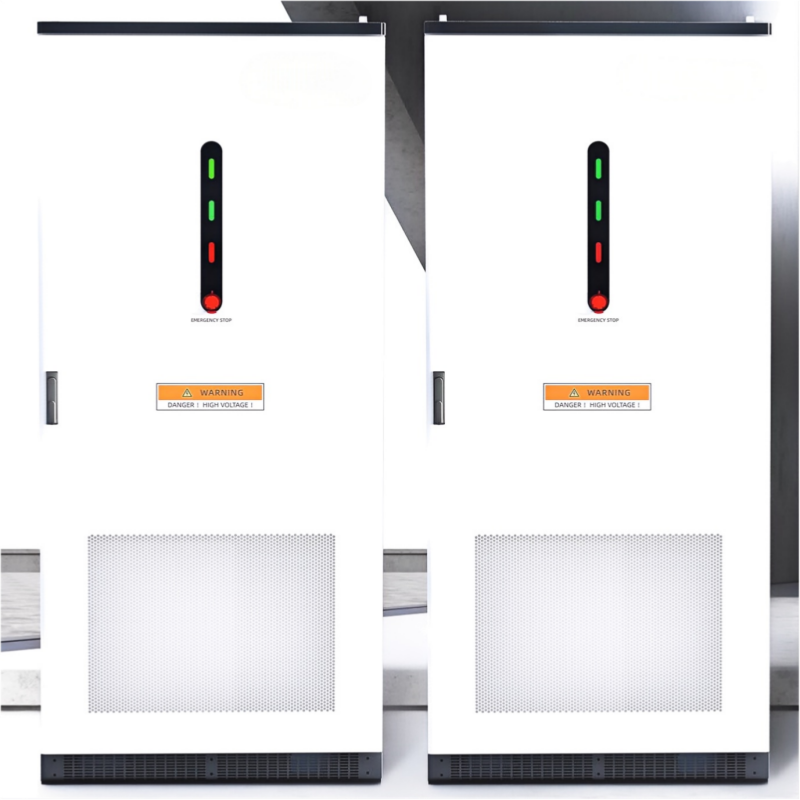
The mechanism by which industrial battery storage reduces peak electricity costs in greenhouse environments relies on time-shifting energy consumption and demand charge mitigation. By storing electricity during off-peak hours when rates are lowest and discharging that stored energy during peak demand periods, greenhouse operators can avoid the utility rate penalties associated with high-power draw during expensive time windows. This strategy not only reduces the per-kilowatt-hour cost of electricity but also minimizes demand charges, which are calculated based on the highest power consumption recorded during any billing interval. For greenhouse facilities with predictable daily energy patterns driven by lighting schedules and environmental controls, this approach delivers immediate and measurable financial benefits.
Understanding Peak Demand Charges in Greenhouse Operations
How Utility Rate Structures Impact Greenhouse Energy Costs
Commercial electricity pricing for agricultural operations typically includes two primary components: energy charges based on total kilowatt-hours consumed and demand charges based on the highest rate of consumption during any measurement period. Demand charges are particularly punitive for greenhouses because lighting systems, HVAC equipment, and irrigation pumps often operate simultaneously during specific windows, creating sharp consumption spikes. Utilities calculate these charges by identifying the fifteen-minute or thirty-minute interval during which the facility drew the most power, then applying a per-kilowatt rate to that peak measurement. This single measurement can determine a substantial portion of the monthly bill regardless of average consumption patterns throughout the rest of the billing cycle.
The financial impact becomes especially severe during seasonal transitions when both heating and supplemental lighting may operate concurrently, or during extreme weather events that push climate control systems to maximum capacity. A single afternoon of high-intensity operation can establish a demand charge baseline that persists for the entire billing period. For greenhouse operators managing multiple facilities or expanding production capacity, these charges scale linearly with operational footprint, making energy cost management a critical factor in business planning and competitive positioning within wholesale markets.
Why Traditional Load Management Falls Short
Conventional approaches to managing peak demand in greenhouse settings involve operational compromises that can negatively affect crop quality and yield. Strategies such as staggering equipment startup times, reducing lighting intensity during peak hours, or temporarily suspending climate control systems may lower instantaneous power draw but create suboptimal growing conditions. Plant physiological processes respond sensitively to light duration, intensity, and spectral quality, meaning any reduction in photosynthetically active radiation during critical growth phases directly impacts biomass accumulation and marketable yield. Similarly, temperature and humidity fluctuations outside target ranges can stress plants, increase disease susceptibility, and extend crop cycles.
Manual load shedding also requires constant operator attention and decision-making, introducing labor costs and potential for human error. Automated demand response systems can help but remain limited by the fundamental constraint that greenhouse equipment serves non-negotiable biological requirements. Unlike industrial manufacturing processes that can be temporarily paused or rescheduled, crop production demands continuous environmental management within narrow parameters. This operational reality makes industrial battery storage particularly valuable because it enables peak cost reduction without compromising growing conditions or requiring complex operational adjustments that may affect harvest timing and quality.
Mechanisms by Which Industrial Battery Storage Reduces Peak Costs
Time-Shifting Energy Consumption Patterns
The primary function of industrial battery storage in greenhouse cost reduction involves charging the system during off-peak hours when electricity rates are substantially lower, then discharging stored energy during peak rate periods. Most utility rate structures feature time-of-use pricing with distinct on-peak, shoulder, and off-peak windows that reflect grid demand patterns. By programming battery management systems to charge exclusively during the lowest-cost windows and discharge during the highest-cost periods, greenhouse operators effectively purchase electricity at wholesale rates while avoiding retail peak pricing. This arbitrage opportunity becomes more valuable in markets with significant rate differentials between peak and off-peak periods.
The economic advantage compounds over time because the storage system operates cyclically, performing this arbitrage function daily without degrading the underlying greenhouse infrastructure or operational capacity. A properly sized industrial battery storage installation can handle the entire facility load during peak windows, completely eliminating grid draw when rates are highest. For greenhouses with high-intensity discharge lighting or significant climate control loads, this can represent a shift of hundreds of kilowatt-hours per day from expensive to inexpensive rate categories, translating to monthly savings that justify system investment within reasonable payback periods.
Demand Charge Mitigation Through Peak Shaving
Beyond time-of-use arbitrage, industrial battery storage systems deliver value through peak shaving, which directly addresses demand charge calculations. By monitoring real-time power consumption and automatically discharging to supplement grid power whenever facility load approaches a predetermined threshold, battery systems prevent the consumption spikes that trigger high demand charges. This active load management occurs transparently to greenhouse operations, maintaining full equipment functionality while capping the maximum instantaneous draw recorded by utility metering equipment. The battery controller constantly analyzes consumption patterns and intervenes precisely when needed to flatten demand curves.
The financial impact of effective peak shaving can be dramatic because demand charges are typically calculated on a per-kilowatt basis at rates ranging from ten to fifty dollars per kilowatt depending on utility territory and rate class. A greenhouse facility that reduces its recorded peak demand by just one hundred kilowatts might save two thousand to five thousand dollars monthly in demand charges alone. Over the typical twenty-year operational life of industrial battery storage infrastructure, this represents hundreds of thousands of dollars in avoided costs, making the technology among the most financially attractive energy investments available to commercial greenhouse operators.
Technical Implementation Considerations for Greenhouse Applications
System Sizing and Capacity Planning
Proper sizing of industrial battery storage installations requires detailed analysis of greenhouse energy consumption patterns, utility rate structures, and operational schedules. The storage capacity measured in kilowatt-hours must be sufficient to cover the facility's energy needs during the entire peak rate window, while the power rating measured in kilowatts must match or exceed the maximum simultaneous load during those periods. Undersized systems will fail to fully eliminate grid draw during expensive windows, leaving some peak exposure, while oversized systems carry unnecessary capital costs that extend payback periods beyond acceptable thresholds for most agricultural businesses.
Greenhouse operators should work with energy consultants to analyze at least twelve months of interval meter data, identifying seasonal variations in consumption patterns and peak demand occurrences. This historical analysis reveals not only average daily patterns but also exceptional events that might drive worst-case demand charges, such as equipment failures that trigger backup systems or extreme weather requiring maximum climate control capacity. The industrial battery storage system must be engineered to handle these exceptional cases while remaining economically justified by routine operational savings. Modular battery architectures allow for phased deployment, enabling operators to start with systems addressing the most expensive consumption windows and expand capacity as operational experience and capital availability permit.
Integration with Existing Greenhouse Infrastructure
Modern industrial battery storage systems integrate seamlessly with standard greenhouse electrical infrastructure through dedicated inverters and control systems that interface with existing service panels and metering equipment. Installation typically occurs downstream of utility metering but upstream of facility distribution panels, allowing the battery system to serve as a parallel power source that supplements or replaces grid electricity based on programmed logic. The electrical connection requires coordination with utility providers to ensure proper metering configuration and compliance with interconnection standards that govern parallel operation with the distribution grid.
Control system integration represents a critical success factor because the battery management platform must coordinate with greenhouse environmental controllers, lighting timers, and irrigation systems to anticipate load patterns and optimize charge-discharge cycles. Advanced implementations incorporate weather forecasting data to predict heating and cooling loads, production schedules that indicate upcoming irrigation events, and utility rate calendars that identify exact timing of rate transitions. This predictive operation maximizes the value extracted from each charge-discharge cycle while ensuring sufficient reserve capacity remains available for unexpected load events that might otherwise trigger demand charges.
Safety and Regulatory Compliance
Industrial battery storage installations in agricultural settings must meet fire safety codes, electrical standards, and environmental regulations that govern energy storage systems. Lithium-ion battery chemistries, which dominate commercial installations due to energy density and cycle life advantages, require specific fire suppression systems, thermal management, and physical separation from combustible materials. Greenhouse facilities with high humidity and temperature variations present additional environmental challenges that must be addressed through proper enclosure design, ventilation, and climate control for battery compartments.
Regulatory requirements vary by jurisdiction but typically include electrical permits, utility interconnection agreements, and potentially environmental permits depending on battery chemistry and capacity. Some agricultural operations may qualify for expedited permitting or streamlined interconnection processes under programs designed to encourage renewable energy and energy storage adoption in farming sectors. Working with experienced installation contractors familiar with both industrial battery storage technology and agricultural facility requirements ensures compliance while minimizing permitting delays that could postpone the start of cost savings realization.
Financial Analysis and Return on Investment
Calculating Payback Periods and Net Present Value
The financial justification for industrial battery storage in greenhouse applications rests on quantifiable cost reductions that can be projected with reasonable accuracy based on historical consumption data and published utility rate schedules. A comprehensive financial analysis should calculate both simple payback period, which divides total system cost by annual savings, and net present value, which accounts for the time value of money and declining savings over the system's operational life as battery capacity gradually degrades. Most commercial greenhouse installations achieve simple payback periods between three and seven years depending on rate structures, system costs, and available incentives.
The calculation must include all relevant cost components: initial capital expenditure for batteries, inverters, and installation labor; ongoing operating costs including maintenance, monitoring, and eventual component replacement; and avoided costs including both energy charge reductions and demand charge savings. Many operators discover that demand charge mitigation alone justifies the investment, with energy arbitrage providing additional upside. Sensitivity analysis should test various scenarios including utility rate increases, battery performance degradation curves, and potential expansion of greenhouse operations that would increase the relative value of installed industrial battery storage capacity.
Available Incentives and Financing Mechanisms
Federal, state, and utility-level incentive programs can significantly improve the economics of industrial battery storage projects in agricultural applications. The federal Investment Tax Credit historically available for solar installations now extends to standalone storage systems in many cases, providing a percentage-based reduction in tax liability. State-level programs vary widely but may include direct rebates, performance-based incentives that pay for verified demand reduction, or accelerated depreciation schedules that improve after-tax returns. Some utilities offer upfront incentives for storage installations that provide grid services, recognizing the broader system benefits of distributed energy storage.
Financing options have expanded considerably as industrial battery storage has matured from experimental technology to proven infrastructure. Power purchase agreements allow greenhouse operators to install systems with no upfront capital, paying instead through a long-term contract for the electricity and capacity provided by the storage system. Equipment leasing provides similar benefits while potentially qualifying for different tax treatment. Traditional equipment loans and agricultural credit facilities increasingly recognize energy storage as eligible collateral, making conventional financing accessible to operations that prefer ownership. The optimal financing structure depends on the specific tax position, capital availability, and risk tolerance of individual greenhouse businesses.
Operational Cost Savings Beyond Electricity Bills
While peak electricity cost reduction represents the primary financial driver for industrial battery storage adoption in greenhouses, secondary benefits contribute additional value that improves overall return on investment. Backup power capability during grid outages protects high-value crops from environmental excursions that could result in total loss, particularly for operations growing transplants, seedlings, or climate-sensitive specialty crops. The insurance value of this backup capacity may exceed thousands of dollars per event when compared to the revenue loss from a single crop failure caused by extended power interruption.
Power quality improvements also deliver measurable value by reducing voltage fluctuations and transients that can damage sensitive electronic controls, LED lighting drivers, and variable-frequency drives on pumps and fans. Equipment protected from power quality issues experiences longer service life and lower maintenance requirements, reducing total cost of ownership across the facility. Some greenhouse operators report measurable improvements in lighting system performance and HVAC efficiency when operating from clean battery power compared to grid electricity subject to harmonic distortion and voltage variations. These cumulative operational benefits, while difficult to quantify precisely, contribute to the overall value proposition of industrial battery storage investments.
Real-World Performance and Operational Insights
Daily Operating Patterns and Charge-Discharge Cycles
Practical experience with industrial battery storage in greenhouse environments reveals consistent operational patterns that validate theoretical performance models. Most installations execute one complete charge-discharge cycle daily, charging during nighttime hours when both electricity rates and facility loads are lowest, then discharging during afternoon and early evening when rates peak and lighting, cooling, and irrigation loads coincide. Battery management systems typically maintain a reserve capacity buffer to handle unexpected load spikes while ensuring sufficient stored energy remains to complete the planned discharge window even if consumption exceeds forecasts.
Seasonal variations affect cycling patterns as day length changes influence both natural light availability and supplemental lighting requirements. Winter operations in northern latitudes may require longer discharge periods to cover extended artificial lighting hours, while summer operations might shift focus toward peak shaving for air conditioning loads. Sophisticated battery controllers adapt automatically to these seasonal patterns, learning from historical performance data to optimize charging schedules and discharge strategies that maximize cost savings under evolving operational conditions. This adaptive capability ensures that industrial battery storage systems continue delivering value across diverse operating scenarios without requiring constant manual intervention.
Performance Monitoring and Optimization
Continuous monitoring of industrial battery storage system performance provides operators with visibility into cost savings, battery health, and opportunities for operational refinement. Modern energy management platforms integrate utility billing data, facility consumption patterns, and battery performance metrics into unified dashboards that clearly display achieved savings compared to baseline scenarios without storage. This transparency builds confidence in the technology while identifying anomalies that might indicate maintenance needs or opportunities to adjust programming for improved financial performance.
Optimization opportunities emerge from detailed analysis of actual versus predicted performance across multiple billing cycles. Operators may discover that adjusting discharge threshold setpoints by small increments yields significant additional demand charge savings, or that shifting charge windows slightly earlier or later captures even lower off-peak rates. Weather correlation analysis can reveal opportunities to preemptively charge batteries ahead of forecasted temperature extremes that will drive exceptional cooling or heating loads. This ongoing refinement process, supported by comprehensive monitoring data, ensures that industrial battery storage installations continue improving financial returns throughout their operational life rather than delivering static performance fixed at commissioning.
FAQ
What size industrial battery storage system does a typical commercial greenhouse need?
System sizing depends on facility load profile and utility rate structure, but most commercial greenhouses benefit from storage capacity ranging from fifty to five hundred kilowatt-hours with power ratings between twenty-five and two hundred kilowatts. A detailed load analysis examining peak demand patterns and duration of expensive rate windows provides the data necessary for accurate sizing. Undersizing compromises cost savings potential while oversizing increases unnecessary capital expenditure, making professional energy assessment essential for optimal system specification.
How long do industrial battery storage systems last in greenhouse environments?
Quality lithium-ion industrial battery storage systems typically provide ten to fifteen years of effective service in greenhouse applications when properly maintained and operated within manufacturer specifications. Battery capacity gradually degrades over thousands of charge-discharge cycles, but systems maintain sufficient performance for economic operation well beyond typical payback periods. Inverter and control system components may require replacement or upgrade during the total system life, but battery modules represent the primary wearing component requiring eventual replacement. Total system economic life often extends twenty years or more when accounting for partial battery replacement and ongoing value delivery.
Can industrial battery storage work with solar panels already installed on a greenhouse?
Industrial battery storage integrates exceptionally well with existing solar installations, creating synergistic value by storing excess solar production for use during evening peak rate periods when panels generate no power. This combination maximizes the financial return from solar investment while further reducing grid dependence and electricity costs. The battery system charges from both grid power during off-peak hours and solar production during daylight, then prioritizes stored energy discharge during the most expensive rate windows. Integration requires coordination between solar inverters and battery controllers but represents a proven configuration that many greenhouse operators have successfully implemented.
What maintenance requirements does industrial battery storage have?
Modern industrial battery storage systems require minimal routine maintenance, primarily consisting of periodic inspection of electrical connections, verification of cooling system operation, and software updates for control platforms. Unlike backup generators that need regular exercise and fuel system maintenance, battery systems operate autonomously with solid-state components that have no routine service requirements. Comprehensive monitoring systems provide early warning of potential issues before they affect performance, allowing scheduled maintenance rather than emergency repairs. Most manufacturers recommend annual professional inspection to verify system health and optimize programming, but day-to-day operation requires no operator intervention beyond monitoring performance dashboards for anomalies.
Table of Contents
- Understanding Peak Demand Charges in Greenhouse Operations
- Mechanisms by Which Industrial Battery Storage Reduces Peak Costs
- Technical Implementation Considerations for Greenhouse Applications
- Financial Analysis and Return on Investment
- Real-World Performance and Operational Insights
-
FAQ
- What size industrial battery storage system does a typical commercial greenhouse need?
- How long do industrial battery storage systems last in greenhouse environments?
- Can industrial battery storage work with solar panels already installed on a greenhouse?
- What maintenance requirements does industrial battery storage have?