
 EN
EN

Plant factories represent one of the most energy-intensive agricultural innovations of the 21st century, requiring precise climate control, artificial lighting, and automation systems that operate continuously. The reliability and cost-effectiveness of power supply directly determine operational viability, making energy management a critical business priority. Commercial energy storage systems, particularly industrial battery storage solutions, have emerged as essential infrastructure for these controlled environment agriculture facilities, offering strategic advantages that extend far beyond simple backup power.
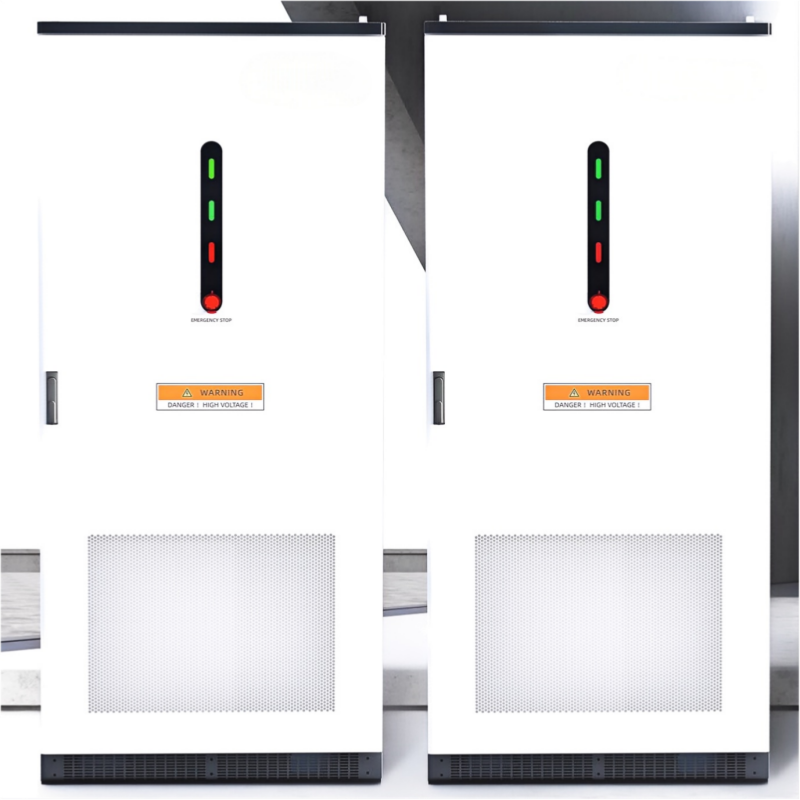
The fundamental reason plant factories benefit from commercial energy storage lies in their unique operational profile: high baseline electricity consumption, sensitivity to power interruptions, and predictable demand patterns that create both challenges and opportunities. Unlike conventional agriculture, these facilities cannot tolerate even brief power outages without risking crop loss, while simultaneously facing electricity costs that can represent 40 to 60 percent of total operating expenses. This combination makes industrial battery storage not merely advantageous but economically necessary for competitive operations in most markets.
Strategic Economic Advantages Through Demand Management
Peak Demand Reduction and Capacity Charge Mitigation
Commercial utility rate structures typically include demand charges based on the highest power consumption recorded during any 15 or 30 minute interval within a billing cycle. For plant factories, lighting systems that activate simultaneously during photoperiod transitions create sharp power spikes that establish elevated demand charges for entire months. Industrial battery storage systems address this issue by discharging stored energy during these critical demand peaks, effectively shaving the consumption profile visible to the utility meter. The financial impact can be substantial, with demand charge reductions of 20 to 40 percent commonly achieved in facilities that implement properly sized storage systems.
The economic logic becomes particularly compelling when considering that these demand charges persist regardless of actual energy consumption. A plant factory might operate efficiently throughout most operational hours, yet a single demand spike during system startup or equipment malfunction can lock in elevated charges for weeks. By buffering these transient peaks with industrial battery storage, facilities gain precise control over their demand profile, converting what would otherwise be unavoidable cost spikes into manageable, predictable expenses. This capability transforms energy storage from a capital expenditure into a directly revenue-protective investment.
Time-of-Use Rate Optimization
Many commercial electricity markets employ time-of-use pricing that varies rates based on grid demand patterns, with peak periods commanding prices three to five times higher than off-peak rates. Plant factories face a strategic challenge because their lighting requirements often align with periods of high grid demand and elevated electricity prices. Industrial battery storage enables temporal arbitrage by charging during low-cost off-peak hours and discharging to meet facility loads during expensive peak periods, effectively purchasing electricity wholesale and consuming it retail on a daily cycle.
The financial modeling for this application reveals compelling returns in markets with significant rate differentials. A facility consuming 500 kilowatts continuously during peak periods could redirect that load to battery discharge, charging the same capacity overnight at rates 60 to 70 percent lower. Over annual operational cycles, this strategy generates cost savings that can justify storage system investments within three to five years, depending on local rate structures and incentive availability. The predictability of plant factory operations makes this application particularly reliable compared to commercial buildings with variable occupancy patterns.
Power Factor Correction and Efficiency Gains
Many industrial facilities face power factor penalties when their electrical systems draw reactive power that utilities must supply without revenue generation. Plant factories with significant motor loads for HVAC systems, pumps, and automation equipment often exhibit poor power factors that trigger penalty charges. Modern industrial battery storage systems with bidirectional inverters can provide reactive power compensation, improving power factor toward unity and eliminating associated penalties while simultaneously delivering active power management capabilities.
The dual-function nature of this benefit enhances return on investment by addressing multiple cost centers with a single infrastructure investment. Rather than installing separate power factor correction equipment alongside backup generators, facilities deploy comprehensive industrial battery storage that handles demand management, time-of-use optimization, power quality improvement, and emergency backup through integrated systems. This consolidation reduces both capital requirements and operational complexity while improving overall electrical system efficiency.
Operational Resilience and Production Continuity
Uninterruptible Power Protection for Critical Systems
The biological reality of plant production creates zero tolerance for power interruptions that would be merely inconvenient in other commercial contexts. Even brief outages can disrupt photoperiod cycles that regulate flowering, compromise climate control leading to temperature or humidity excursions, or halt nutrient delivery systems causing immediate stress to crops. Industrial battery storage provides instantaneous transition to stored power during grid disturbances, maintaining continuous operation of all critical systems without the startup delays inherent in generator-based backup approaches.
This seamless transition capability proves particularly valuable during the brief voltage sags and momentary interruptions that occur far more frequently than extended outages. While generators require 10 to 30 seconds to start and synchronize, industrial battery storage responds in milliseconds, bridging these transient events without any interruption to sensitive equipment. The result is comprehensive protection against both catastrophic failures and the subtle disruptions that cumulatively degrade crop quality and yield consistency over production cycles.
Extended Autonomy During Grid Outages
When utility power failures extend beyond momentary events, industrial battery storage systems maintain operations for durations determined by storage capacity and facility load profile. Strategic system design enables plant factories to prioritize essential loads during extended outages, maintaining climate control and control systems while potentially reducing lighting intensity or deferring non-critical operations. This load management flexibility allows facilities to extend autonomy periods significantly compared to simple full-load backup approaches.
The economic value of this extended operation during outages reflects both direct crop protection and indirect business continuity benefits. A commercial plant factory producing high-value crops like leafy greens or herbs faces potential losses of tens of thousands of dollars per day during production interruptions when considering both immediate crop damage and downstream fulfillment failures. Industrial battery storage that maintains even reduced production during multi-hour outages prevents these cascading losses while providing time to implement orderly shutdown procedures if power restoration appears unlikely.
Redundancy and Maintenance Flexibility
Properly designed industrial battery storage systems offer N+1 redundancy configurations where capacity exceeds minimum requirements, allowing individual battery modules or inverter sections to undergo maintenance without compromising facility protection. This architectural approach proves particularly valuable for plant factories operating continuous production schedules with no planned downtime windows for infrastructure maintenance. Equipment servicing can occur during normal operations with stored energy capacity temporarily reduced but still adequate for anticipated demand.
The maintenance flexibility extends to utility-side work as well, where planned outages for transformer maintenance or line work can be accommodated without production interruption. Rather than coordinating facility schedules around utility maintenance windows or operating backup generators for planned events, plant factories with adequate industrial battery storage simply operate normally from stored energy during these predetermined outage periods. This independence from external scheduling constraints improves operational predictability and eliminates the productivity losses associated with production pauses.
Integration with Renewable Energy Systems
Solar Generation Capture and Time-Shifting
Plant factories increasingly incorporate rooftop or adjacent solar photovoltaic systems to reduce grid dependence and improve sustainability metrics. However, solar generation peaks during midday hours when many plant factory lighting systems operate at reduced intensity or remain off entirely, depending on crop light requirements and photoperiod scheduling. Industrial battery storage solves this temporal mismatch by capturing excess solar generation during production hours and deploying that stored renewable energy during evening and overnight periods when facility loads peak but solar production ceases.
This time-shifting capability fundamentally improves the economic return on solar investments by enabling facilities to consume their own generation rather than exporting it to the grid at wholesale rates while importing power at retail prices during high-demand periods. The combination of solar generation and industrial battery storage creates a partially autonomous microgrid that reduces both energy costs and carbon footprint while providing the operational resilience benefits of stored energy. Financial modeling consistently demonstrates that combined solar-plus-storage systems deliver superior returns compared to either technology deployed independently.
Load Following and Generation Smoothing
Renewable generation exhibits variability that creates challenges for facilities attempting to maximize self-consumption. Cloud cover, seasonal variations, and daily weather patterns cause solar output to fluctuate significantly even across hourly intervals. Industrial battery storage systems with sophisticated energy management algorithms can smooth these variations, charging when instantaneous generation exceeds facility loads and discharging when generation dips below consumption, maintaining stable net grid interaction despite volatile renewable production.
This generation smoothing capability becomes particularly valuable in markets with unfavorable net metering policies or time-of-generation compensation structures. Rather than exporting variable solar production at unfavorable rates during midday and importing expensive grid power during evening peaks, facilities use industrial battery storage to buffer their renewable assets, effectively creating firm capacity from intermittent generation. The operational flexibility this provides enables plant factories to structure their lighting schedules around crop requirements rather than compromising production timing to match renewable availability.
Grid Services and Revenue Participation
Advanced energy markets increasingly offer compensation programs where commercial facilities can provide grid services through demand response participation, frequency regulation, or capacity market enrollment. Industrial battery storage systems enable plant factories to participate in these programs by providing fast-responding capacity that grid operators can dispatch during peak demand events or system emergencies. The revenue streams from these programs can materially improve project economics, with some facilities earning thousands of dollars monthly through strategic participation.
The key to successful participation lies in balancing grid service commitments with facility operational requirements. Modern industrial battery storage systems partition capacity between firm facility needs and discretionary grid services, ensuring that participation in external programs never compromises production continuity. Energy management systems coordinate between facility loads, renewable generation, battery state of charge, and grid service dispatch signals to optimize total economic value while maintaining operational priorities. This multi-objective optimization represents sophisticated deployment of storage assets that extends benefits beyond simple facility-level applications.
Technological and Operational Considerations
System Sizing and Capacity Planning
Determining appropriate industrial battery storage capacity requires careful analysis of facility load profiles, operational priorities, and economic objectives. Undersized systems fail to capture available demand charge savings or provide adequate outage duration, while oversized installations increase capital costs without proportional benefit increases. Effective sizing methodologies examine interval meter data to identify demand peaks, evaluate time-of-use arbitrage opportunities, and model outage protection requirements under various load reduction scenarios.
For typical plant factory applications, storage capacity ranging from two to six hours of facility load represents the practical optimization point for most market conditions. This range provides sufficient capacity for meaningful demand management and time-of-use shifting while maintaining reasonable project costs and physical footprint requirements. Facilities in regions with particularly volatile electricity pricing or unreliable grid infrastructure may justify larger systems, while those primarily focused on power quality and brief outage protection may optimize toward smaller, power-dense configurations with limited energy capacity.
Battery Chemistry Selection and Performance Characteristics
Industrial battery storage systems employ various electrochemical technologies, each offering distinct performance characteristics relevant to plant factory applications. Lithium-ion chemistries dominate current commercial installations due to favorable energy density, efficiency, and cycle life characteristics that align well with daily cycling applications. Within lithium-ion categories, lithium iron phosphate formulations often prove preferable for stationary commercial applications due to superior safety profiles and longer cycle life compared to higher energy density chemistries optimized for mobile applications.
The selection process must consider anticipated duty cycles, ambient temperature conditions, and performance degradation patterns across system lifespan. Plant factories implementing aggressive time-of-use arbitrage with daily full-depth cycling require battery systems rated for thousands of cycles at specified depth of discharge, while facilities primarily focused on demand management with occasional deep discharge for outage protection may optimize differently. Working with experienced integrators familiar with agricultural facility requirements ensures appropriate technology selection that balances initial costs against lifecycle performance and replacement timing.
Thermal Management and Environmental Considerations
Battery performance and longevity depend critically on operating temperature, with both elevated heat and extreme cold accelerating degradation and reducing available capacity. Plant factories typically maintain climate-controlled environments favorable for battery systems, but installation locations still require careful evaluation. Battery enclosures installed in mechanical rooms or outdoor locations must incorporate appropriate thermal management, while systems located within conditioned spaces benefit from facility climate control but contribute heat loads that HVAC systems must address.
Modern industrial battery storage systems integrate sophisticated thermal management incorporating both passive and active cooling approaches depending on installation requirements and local climate conditions. Proper thermal design ensures that battery cells remain within optimal operating temperature ranges across all seasonal conditions and load scenarios, maximizing both performance and longevity. For plant factories, this consideration extends beyond the storage system itself to encompass facility-level thermal planning that accounts for heat dissipation from both growing operations and supporting infrastructure including industrial battery storage installations.
Financial Analysis and Investment Justification
Total Cost of Ownership Modeling
Comprehensive financial evaluation of industrial battery storage for plant factories must account for multiple value streams across anticipated system lifespan. Initial capital costs include equipment procurement, installation labor, electrical integration, and any facility modifications required for system accommodation. These upfront investments must be compared against ongoing operational savings from demand charge reduction, energy cost optimization, avoided outage losses, and potential revenue from grid services participation. Additional considerations include available incentives, financing costs, and residual system value at project conclusion.
Sophisticated total cost of ownership models incorporate degradation patterns that gradually reduce available capacity over time, requiring periodic performance adjustments or eventual augmentation investments. These models also account for evolving electricity rate structures, potential expansion of facility capacity, and technological obsolescence risks inherent in rapidly advancing energy storage markets. When properly constructed with conservative assumptions and sensitivity analysis across key variables, these financial models provide decision-makers with realistic expectations regarding payback periods, internal rates of return, and net present value across various operational scenarios.
Incentive Programs and Policy Support
Many jurisdictions offer financial incentives specifically targeting commercial energy storage deployment, recognizing the grid benefits these distributed assets provide. Federal investment tax credits, state-level rebate programs, utility demand response incentives, and accelerated depreciation schedules can materially improve project economics, reducing effective capital costs by 20 to 40 percent in favorable policy environments. Plant factory operators should thoroughly investigate available programs during project planning, as incentive availability often influences optimal system sizing and configuration decisions.
The evolving policy landscape surrounding industrial battery storage and renewable energy integration creates both opportunities and uncertainties for long-term financial planning. Facilities should structure investments to capture currently available incentives while maintaining operational and financial viability even if policy support diminishes over time. This conservative approach ensures that projects deliver value based on fundamental operational benefits rather than depending entirely on temporary policy advantages that may not persist across full system lifespan.
Risk Mitigation and Business Continuity Value
Beyond quantifiable cost savings and revenue generation, industrial battery storage provides risk mitigation benefits that prove difficult to capture in traditional financial models but represent substantial business value. The insurance against crop losses during power outages, protection of brand reputation through consistent product availability, and operational independence from grid reliability issues all contribute to business resilience that justifies storage investments even when pure energy arbitrage economics appear marginal.
For plant factories serving institutional customers with firm delivery commitments or operating in markets where product differentiation depends on reliability and consistency, these intangible benefits often prove decisive in investment decisions. The cost of a single major production failure from extended power outage frequently exceeds the entire capital investment in industrial battery storage systems, making the protection value alone sufficient justification independent of ongoing operational savings. This risk management perspective shifts storage from optional efficiency enhancement to essential infrastructure comparable to insurance policies that provide asymmetric value during adverse events.
FAQ
How long can industrial battery storage keep a plant factory running during a power outage?
The duration depends on battery capacity and facility power consumption. A properly sized industrial battery storage system typically provides four to eight hours of full-load operation for a commercial plant factory. However, by implementing load shedding strategies that reduce lighting intensity or defer non-essential systems, facilities can extend autonomy to 12 hours or longer. System designers work with facility operators to determine optimal capacity based on local grid reliability, outage frequency patterns, and acceptable risk tolerance for the specific crops and production schedules involved.
What is the typical return on investment timeline for plant factory energy storage systems?
Return on investment timelines vary significantly based on local electricity rate structures, available incentives, and facility operational patterns, but most commercial plant factory installations achieve payback within four to seven years. Facilities in markets with high demand charges, significant time-of-use rate differentials, and available incentive programs may see payback periods as short as three years. The calculation should include both direct energy cost savings and avoided losses from power interruptions, as production continuity benefits often represent substantial value that accelerates effective payback compared to energy savings alone.
Can industrial battery storage systems integrate with existing backup generators?
Yes, industrial battery storage systems integrate seamlessly with existing generator infrastructure in hybrid configurations that leverage the strengths of both technologies. The battery system provides instant response to power disruptions and handles brief outages independently, while generators serve as extended backup for prolonged utility failures. This hybrid approach reduces generator runtime hours, lowers maintenance costs, eliminates fuel consumption for short interruptions, and provides superior power quality compared to generator-only backup. Many facilities find that adding industrial battery storage allows them to downsize planned generator capacity or extend replacement intervals for aging generator equipment.
How does battery degradation affect long-term performance in plant factory applications?
Modern lithium-ion industrial battery storage systems typically retain 70 to 80 percent of original capacity after 10 years of daily cycling in properly managed applications. This gradual degradation is predictable and can be incorporated into system design by initially oversizing capacity or planning for mid-life augmentation. For plant factories, the consistent daily cycling patterns actually prove favorable for battery longevity compared to irregular usage profiles, as battery management systems can optimize charging and discharging parameters for predictable loads. Most commercial warranties guarantee minimum capacity retention thresholds, providing financial protection against premature degradation and ensuring that systems continue delivering value throughout their intended operational lifespan.
Table of Contents
- Strategic Economic Advantages Through Demand Management
- Operational Resilience and Production Continuity
- Integration with Renewable Energy Systems
- Technological and Operational Considerations
- Financial Analysis and Investment Justification
-
FAQ
- How long can industrial battery storage keep a plant factory running during a power outage?
- What is the typical return on investment timeline for plant factory energy storage systems?
- Can industrial battery storage systems integrate with existing backup generators?
- How does battery degradation affect long-term performance in plant factory applications?