
 EN
EN
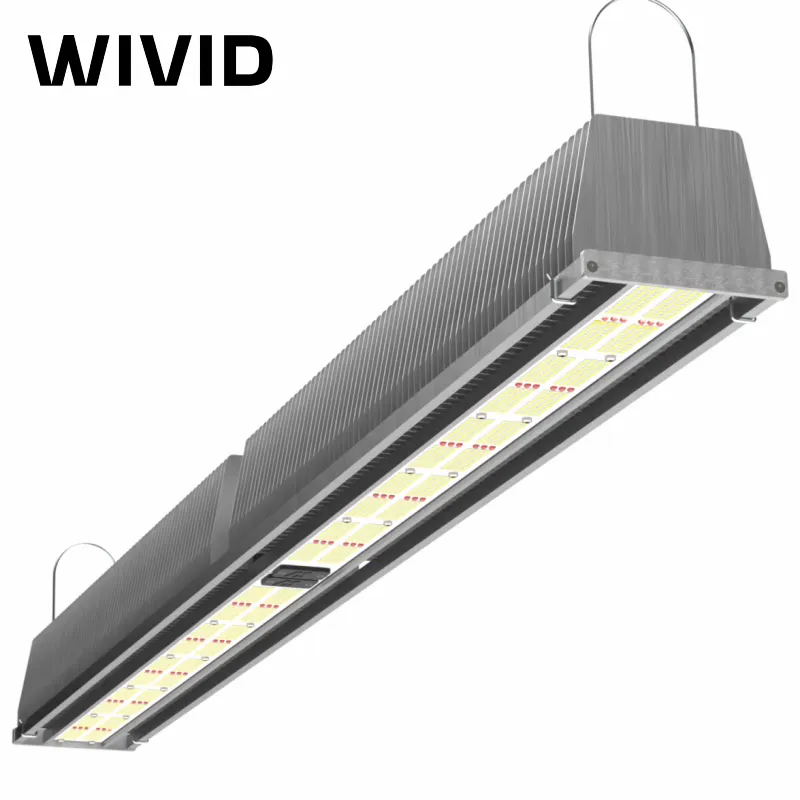
Achieving consistent crop quality remains one of the most pressing challenges in modern agriculture and controlled environment farming. Variability in plant growth, uneven maturation, and inconsistent yields directly impact profitability and market competitiveness. Horticultural LED lighting has emerged as a transformative technology that addresses these challenges by delivering precise, uniform light distribution that standardizes growing conditions across entire cultivation facilities. Unlike traditional lighting systems that produce inconsistent spectral output and uneven coverage, horticultural LED lighting enables growers to maintain exact light intensity, photoperiod, and spectral composition throughout their operations, resulting in measurably improved crop consistency and predictable harvests.
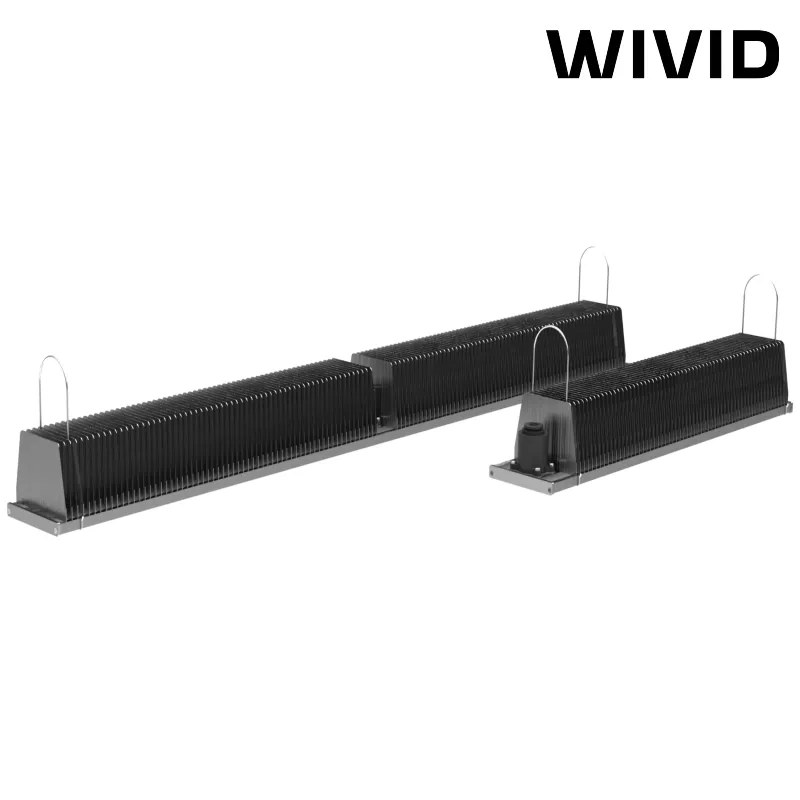
The science behind crop consistency lies in environmental standardization. Plants respond to light wavelength, intensity, and duration in predictable ways when conditions remain constant. Horticultural LED lighting systems provide this constancy by operating at stable power levels, maintaining precise spectral ratios, and distributing photons uniformly across growing areas. This technological advantage translates into visible improvements across every metric that matters to commercial growers: reduced plant-to-plant variation, synchronized flowering and fruiting cycles, improved nutritional profiles, and extended shelf life post-harvest. For operations scaling from hundreds to thousands of plants, the compounding effect of consistency becomes a substantial competitive advantage.
Spectral Precision and Uniform Light Distribution
Optimizing Wavelength for Growth Stages
Horticultural LED lighting systems excel at delivering specific light wavelengths that drive particular plant developmental outcomes. Blue light (400–500 nanometers) promotes vegetative growth, strengthens plant structure, and encourages compact, bushy development. Red light (600–700 nanometers) accelerates flowering, fruiting, and energy production. By combining these wavelengths in precisely tuned ratios, horticultural LED lighting enables growers to guide plant development along identical timelines, ensuring that all plants within a given cultivation cycle reach flowering and harvest stages simultaneously. This synchronization eliminates the variability caused by traditional lighting, which produces broad, uncontrolled spectral outputs that plants interpret inconsistently. When all plants receive identical light signals at identical intensities, developmental timing becomes predictable and repeatable across crop cycles.
Even Coverage and Elimination of Light Shadows
Physical light distribution represents another critical factor in consistency. Plants positioned directly beneath traditional light fixtures receive significantly more photons than plants at the edges of growing areas, creating zones of high and low light intensity. This gradient causes outer plants to develop slower, flower later, and achieve lower yields than center plants. Horticultural LED lighting designs address this through advanced optics, multi-unit configurations, and reflective technologies that distribute light evenly across the entire growing footprint. High-efficiency horticultural LED lighting fixtures eliminate shadow zones and reduce light gradient, so every plant receives virtually identical photon flux density regardless of position. This uniform distribution is fundamental to achieving the crop consistency that vertical farms, greenhouse operations, and controlled environment agriculture facilities require.
Environmental Control and Reproducible Growing Conditions
Photoperiod Standardization
Photoperiod—the duration of light exposure—is a critical environmental variable that controls flowering initiation, growth rate, and plant morphology. Traditional lighting systems often suffer from inconsistent operation due to aging bulbs, thermal drift, and control system drift, which causes photoperiods to vary unintentionally across cultivation cycles. Horticultural LED lighting systems maintain precise photoperiods because they operate with digital control systems that trigger on and off at exact times, free from degradation or thermal variation. This consistency means that every crop cycle receives identical photoperiod exposure, allowing growers to establish standardized protocols that yield repeatable results. When photoperiods remain constant, plants develop predictably, flowering windows narrow, and harvest timing becomes precise rather than approximate.
Thermal Stability and Plant Stress Reduction
Heat stress introduces significant crop inconsistency because plants respond to excessive temperature by altering growth patterns, reducing yield, and accelerating senescence. Traditional high-intensity discharge lighting and incandescent fixtures generate substantial waste heat that raises canopy temperatures and creates uneven thermal environments. Horticultural LED lighting systems produce minimal waste heat, maintaining cooler and more stable growing environments. This thermal stability reduces plant stress and prevents the growth variability that heat-stressed plants exhibit. Plants growing under consistent temperature conditions develop more uniformly, accumulate consistent nutrient levels, and achieve consistent quality metrics. For growers managing large facilities, the thermal consistency provided by horticultural LED lighting eliminates one of the most difficult-to-control variables in achieving crop consistency.
Measurable Improvements in Crop Quality and Market Readiness
Synchronized Maturation and Harvest Efficiency
In commercial operations, crop consistency directly affects harvest efficiency and labor productivity. When plants mature at different rates, growers must make multiple selective harvests, increasing labor costs and extending operational complexity. Horticultural LED lighting promotes synchronized maturation because identical light conditions drive identical physiological timelines across the crop. This means the majority of plants reach harvest-ready status within a narrow window, enabling single or dual harvests rather than multiple passes through the growing area. Synchronized maturation improves labor scheduling, reduces handling damage, and accelerates turnover between crop cycles. For facilities operating on tight schedules, the harvest window compression enabled by horticultural LED lighting represents substantial operational improvement.
Consistent Flavor, Nutrition, and Shelf Life
End-market quality consistency depends on uniform development and nutrient accumulation. Plants that receive inconsistent light develop inconsistent chemical profiles, leading to variable flavor, color, and nutritional content. Horticultural LED lighting systems maintain the environmental uniformity that drives consistent secondary metabolite production, chlorophyll development, and nutrient uptake across all plants. This translates into visibly consistent product quality at harvest: uniform color, predictable flavor profiles, consistent firmness, and longer shelf life. Retailers and food service operators value this consistency because it supports brand reputation and reduces product variability complaints. For growers supplying premium markets, horticultural LED lighting enables the crop consistency that commands premium pricing and builds customer loyalty.
FAQ
What specific wavelengths does horticultural LED lighting provide for optimal crop consistency?
Horticultural LED lighting systems typically deliver red wavelengths between 620–700 nanometers to promote flowering and fruit development, combined with blue wavelengths between 400–500 nanometers to strengthen vegetative structure. Advanced systems allow custom spectral tuning to match specific crop requirements and growth stages. The precise combination of these wavelengths ensures that all plants receive identical light signals, driving synchronized development and consistent crop characteristics. This spectral consistency is impossible to achieve with traditional lighting sources, which produce broader, less controllable spectral outputs.
How does horticultural LED lighting reduce plant-to-plant variation in growing facilities?
Plant-to-plant variation occurs when different locations within a growing area receive different light intensity, quality, or duration. Horticultural LED lighting eliminates this variation through even optical distribution, eliminating shadow zones and reducing light gradients across the entire cultivation footprint. When all plants receive identical light conditions—same intensity, same spectrum, same photoperiod—they develop along identical physiological timelines. Additionally, horticultural LED lighting systems maintain thermal stability and operate with precise digital controls that prevent the environmental drift that causes inconsistency. This combination of uniform coverage and stable operation produces the environmental consistency required for uniform crop development.
Can horticultural LED lighting help achieve consistent harvests across multiple crop cycles?
Yes. Horticultural LED lighting systems operate with reproducible specifications, maintaining identical light intensity, spectrum, and photoperiod across successive crop cycles. Because plants respond predictably to identical environmental conditions, growers can establish standardized growing protocols that deliver consistent results year-round. This reproducibility enables reliable forecasting of yield, harvest timing, and quality metrics. Over multiple crop cycles, this consistency compounds into substantial operational advantages: reduced waste, predictable labor requirements, and reliable supply chain planning. Facilities using horticultural LED lighting report significantly tighter consistency variance compared to operations using traditional lighting systems.