
 EN
EN

Seedling development represents one of the most critical phases in commercial horticulture, where light quality, intensity, and distribution directly influence root architecture, stem strength, leaf morphology, and overall transplant success. While traditional overhead lighting has dominated propagation environments for decades, growers increasingly recognize that canopy-level illumination alone cannot address the photosynthetic limitations experienced by lower foliage and developing tissue in dense seedling trays. Modern seedling lighting systems integrate strategic spectrum engineering, precise photon delivery, and spatial optimization to create uniform light environments that support vigorous early growth without the leggy, weak characteristics that compromise downstream productivity.
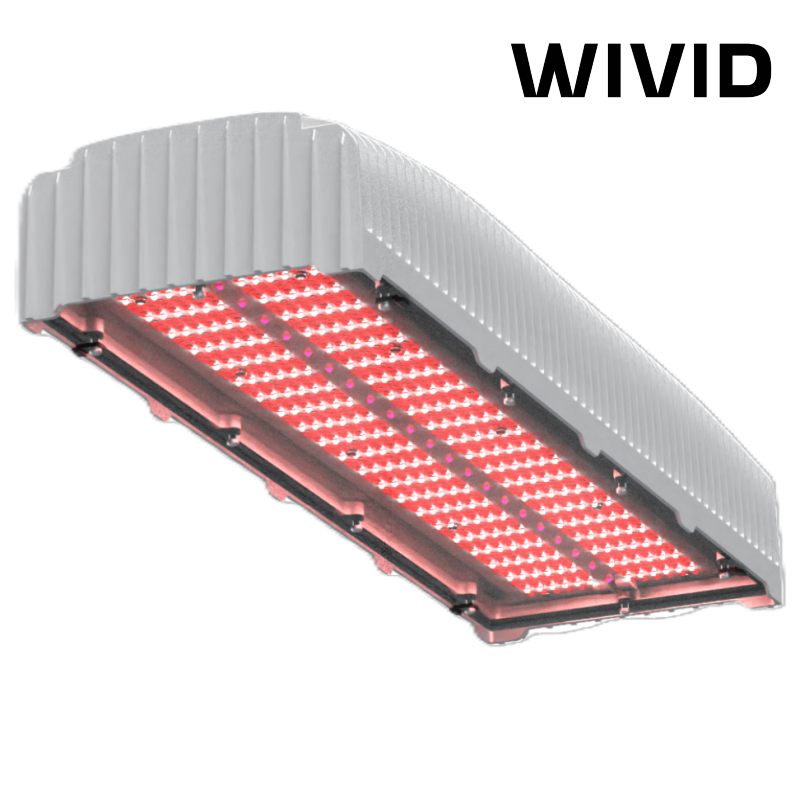
The evolution from single-point high-intensity discharge systems to distributed LED arrays has fundamentally changed propagation protocols, enabling growers to manipulate morphological outcomes through targeted wavelength combinations and dynamic intensity scheduling. Advanced seedling lighting systems now incorporate both vertical and lateral photon distribution strategies, including concepts adapted from mature-crop horticulture interlight applications, to eliminate shade zones within propagation benches and ensure every seedling receives adequate photosynthetically active radiation regardless of tray position. This architectural approach to light delivery addresses the biological reality that seedlings with uniform light exposure develop more consistent root-to-shoot ratios, exhibit superior transplant shock resistance, and establish faster in production systems compared to cohorts grown under traditional overhead-only configurations.
Photobiological Requirements of Early-Stage Plant Development
Critical Light Parameters During Germination and Cotyledon Expansion
The transition from heterotrophic seed reserves to autotrophic photosynthesis marks a physiological threshold where light quantity and quality become primary growth determinants. Emerging cotyledons require specific photon flux densities typically between eighty and one hundred fifty micromoles per square meter per second to initiate chloroplast development and establish functional photosynthetic machinery. Seedling lighting systems designed for this phase must deliver consistent intensity across entire propagation surfaces, as even modest variations of twenty to thirty percent can create developmental asynchrony that persists through subsequent growth stages. The spectrum composition during this window influences chlorophyll synthesis pathways, with blue wavelengths around four hundred fifty nanometers driving cryptochrome-mediated responses that regulate hypocotyl elongation and cotyledon expansion rates.
Red photons in the six hundred fifty to six hundred sixty nanometer range provide the primary energy for carbon fixation during early photosynthesis, though excessive red enrichment without balancing blue content promotes undesirable stem elongation and thin leaf tissue. Modern horticulture interlight systems apply spectral ratios that maintain compact morphology while maximizing photosynthetic efficiency, typically employing blue-to-red ratios between one-to-three and one-to-five depending on species-specific responses. Far-red wavelengths beyond seven hundred nanometers, while useful for accelerating flowering in mature crops, generally receive limited inclusion in seedling spectra to prevent excessive shade-avoidance responses that compromise structural integrity in young plants.
Developmental Transitions From Seedling to Transplant-Ready Stage
As true leaves emerge and expand, photosynthetic capacity increases substantially, creating demand for higher light intensities that can range from one hundred fifty to three hundred micromoles per square meter per second depending on species light requirements and production goals. This developmental phase proves particularly challenging in traditional propagation environments where overhead fixtures create strong vertical light gradients, leaving lower leaf surfaces and inner canopy zones in relative shade even when upper foliage receives adequate illumination. Strategic implementation of horticulture interlight principles within seedling systems addresses these gradients by introducing lateral or inter-canopy light sources that target previously shaded tissue, effectively doubling the illuminated leaf area and proportionally increasing whole-plant carbon assimilation.
The morphological benefits extend beyond simple photon capture, as improved light distribution reduces the apical dominance signals that cause excessive vertical growth at the expense of lateral branching and root development. Seedlings grown under multi-directional lighting exhibit more balanced auxin distribution, leading to thicker stems, shorter internodes, and enhanced root system proliferation that translates directly to transplant success rates. Commercial propagators implementing comprehensive seedling lighting systems report reductions in production time ranging from ten to twenty-five percent compared to conventional overhead-only approaches, alongside improvements in transplant uniformity that streamline downstream handling and reduce crop cycle variability.
Architectural Integration of Lighting Components in Propagation Environments
Overhead Primary Illumination Design Considerations
The foundation of effective seedling lighting systems begins with properly configured overhead fixtures that establish baseline photon availability across propagation benches or chamber floors. Linear LED arrays suspended thirty to fifty centimeters above tray surfaces provide the most uniform distribution patterns, minimizing the intensity variations that create differential growth rates within seedling cohorts. Fixture spacing calculations must account for beam angles and mounting heights to achieve overlapping light cones that eliminate dark zones between luminaires, with typical spacing-to-height ratios between one-point-two and one-point-five for optimal uniformity coefficients above zero-point-nine.
Thermal management becomes particularly important in enclosed propagation chambers where ambient temperatures already run elevated to support germination, requiring seedling lighting systems to incorporate passive or active cooling that prevents radiant heat from overwhelming environmental control systems. Modern fixtures designed specifically for propagation applications maintain junction temperatures below eighty-five degrees Celsius while keeping fixture surface temperatures within ten degrees of ambient, ensuring that light intensity can be maximized without creating localized hot spots that stress sensitive seedlings. The spectral output should emphasize photosynthetically efficient wavelengths while minimizing far-red and infrared emissions that contribute heat without corresponding photosynthetic benefit.
Supplemental Lateral and Inter-Canopy Illumination Strategies
Once seedlings develop beyond the initial cotyledon stage and begin forming multiple leaf layers, the limitations of overhead-only lighting become increasingly apparent as self-shading reduces light penetration to lower foliage. This phenomenon, well-documented in mature crop production, occurs even in relatively young seedlings when grown at commercial densities in standard propagation trays. Applying horticulture interlight concepts to propagation systems involves introducing low-profile LED modules positioned laterally along bench edges or between tray rows, delivering photons horizontally into canopy zones that receive minimal overhead illumination.
These supplemental light sources typically operate at lower intensities than overhead fixtures, contributing an additional thirty to seventy micromoles per square meter per second to previously shaded leaf surfaces. The cumulative effect substantially increases whole-plant photon capture without raising canopy-top intensity to levels that might cause photoinhibition or excessive transpiration in young tissue. Implementation requires careful positioning to avoid creating new shadow patterns while ensuring fixtures remain accessible for routine tray handling and sanitation protocols. Modular mounting systems that integrate with standard bench infrastructure enable propagators to scale horticulture interlight deployment according to crop-specific requirements and production stage transitions.
Spectrum Engineering for Morphological Control and Stress Conditioning
Blue Light Regulation of Compact Growth Architecture
Blue wavelengths between four hundred to five hundred nanometers exert profound regulatory control over seedling morphology through photoreceptor-mediated signaling pathways that modulate cell expansion, stomatal development, and phototropic responses. Increasing blue photon fractions within seedling lighting systems from fifteen to thirty percent of total photosynthetic photon flux consistently produces shorter, more compact plants with thicker leaves and enhanced mechanical strength. This response proves particularly valuable for species prone to excessive elongation under standard growing conditions, allowing growers to achieve desired morphological targets without chemical growth regulators that may interfere with subsequent crop development or leave residues in organic production systems.
The mechanisms underlying blue light morphological control involve both phototropin and cryptochrome pathways that influence auxin transport, gibberellin sensitivity, and cell wall biosynthesis patterns. Seedlings receiving enriched blue spectra allocate more photosynthate to structural compounds rather than rapid cell expansion, resulting in plants better equipped to tolerate transplant stress and environmental fluctuations. However, excessive blue enrichment beyond thirty-five percent can reduce overall growth rates by limiting photosynthetic efficiency, as red photons drive the bulk of carbon fixation reactions. Optimal seedling lighting systems balance morphological control objectives with photosynthetic productivity requirements, typically through programmable spectrum control that adjusts blue fractions dynamically across propagation stages.
Red to Far-Red Ratios and Shade Avoidance Suppression
The ratio of red to far-red photons detected by phytochrome photoreceptors serves as a critical environmental signal that plants use to assess competition and adjust growth strategies accordingly. In natural conditions, neighboring vegetation filters red light more effectively than far-red, creating reduced red-to-far-red ratios that trigger shade avoidance responses including accelerated stem elongation and reduced branching. Conventional horticulture interlight systems in mature crops sometimes employ far-red enrichment to promote specific developmental outcomes, but seedling applications generally minimize far-red content to prevent undesirable elongation that compromises transplant quality.
Maintaining red-to-far-red ratios above one-point-two in seedling lighting systems keeps phytochrome populations predominantly in their active form, suppressing shade avoidance signaling and promoting compact, branched growth patterns. This spectral strategy proves particularly important in high-density propagation where seedlings inevitably detect reflected and transmitted light from neighbors, creating pseudo-shade signals even under adequate overall intensity. Advanced spectrum control allows propagators to fine-tune red-to-far-red ratios across different production zones, applying higher ratios in early stages to establish compact architecture, then potentially introducing controlled far-red exposure in final hardening stages to condition plants for transition to variable light environments.
Dynamic Lighting Protocols for Accelerated Development and Conditioning
Photoperiod Manipulation in Propagation Scheduling
Day length influences not only reproductive development in photoperiod-sensitive species but also vegetative growth rates, metabolic efficiency, and stress tolerance characteristics during seedling stages. Extending daily light periods beyond natural photoperiods through supplemental seedling lighting systems enables propagators to accelerate biomass accumulation and compress production schedules without requiring intensity increases that might exceed young plants' photosynthetic capacity. Most species tolerate photoperiods of sixteen to twenty hours during vegetative propagation, with optimal durations varying based on daily light integral targets and species-specific saturation characteristics.
However, continuous lighting or photoperiods exceeding twenty hours can induce stress symptoms in some species, manifesting as chlorosis, leaf curling, or reduced growth despite increased photon delivery. These responses reflect limitations in downstream metabolic processes that cannot keep pace with continuous photosynthesis, leading to accumulation of reactive oxygen species or carbohydrate-signaling disruptions. Sophisticated seedling lighting systems incorporate programmable photoperiod control that can adjust day length progressively across propagation stages, potentially starting with moderate fourteen-hour days during germination, extending to eighteen hours during rapid growth, then reducing to production photoperiods during hardening to minimize transplant shock.
Intensity Ramping and Spectral Transitions Across Growth Stages
Abrupt transitions in light intensity or spectrum composition can stress seedlings and disrupt developmental progression, making gradual transitions preferable for maintaining consistent growth trajectories. Progressive intensity ramping begins with relatively low photon flux densities during germination and cotyledon emergence, gradually increasing to target vegetative levels as true leaves develop photosynthetic capacity. This approach prevents photoinhibition in newly emerged tissue while ensuring that increasing leaf area always operates near light saturation points that maximize carbon assimilation efficiency.
Spectral transitions serve complementary purposes, with propagation protocols often beginning with blue-enriched spectra to establish compact morphology, then gradually shifting toward more balanced or red-enriched compositions as biomass accumulation becomes the primary objective. Some advanced horticulture interlight implementations in seedling systems employ independently controllable spectrum channels in overhead and lateral fixtures, allowing growers to maintain morphological control through blue-enriched overhead light while simultaneously maximizing photosynthetic efficiency through red-enriched lateral illumination. These multi-dimensional lighting strategies require sophisticated control systems but deliver measurable improvements in both seedling quality metrics and production efficiency parameters.
System Integration with Environmental Control and Irrigation Management
Coordinating Light Intensity with Temperature and Humidity Parameters
Photosynthetic rate, transpiration demand, and nutrient uptake all increase proportionally with light intensity, creating interdependencies between seedling lighting systems and other environmental control parameters that must be actively managed to prevent stress conditions. Higher light intensities drive elevated leaf temperatures through absorbed radiant energy, requiring corresponding adjustments in ambient temperature and air circulation to maintain optimal leaf-to-air vapor pressure deficits. Seedlings grown under intensive lighting without adequate temperature management often exhibit excessive transpiration that outpaces root system water uptake capacity, leading to wilting despite adequate substrate moisture.
Humidity control becomes equally critical, as the combination of high light intensity and low relative humidity creates vapor pressure deficits that can exceed young plants' physiological tolerance limits. Propagation environments implementing advanced seedling lighting systems typically maintain relative humidity between sixty and seventy-five percent during early stages, gradually reducing to fifty-five to sixty-five percent during hardening phases as root systems develop capacity to support higher transpiration rates. Integration between lighting controls and environmental management systems enables automated adjustments that maintain target vapor pressure deficits regardless of light intensity changes, ensuring that increases in photon delivery translate to improved growth rather than accumulated stress.
Synchronizing Lighting Schedules with Fertigation and Growth Monitoring
Increased photosynthetic activity under optimized seedling lighting systems drives proportionally higher nutrient demand, requiring fertigation protocols calibrated to actual plant uptake rates rather than calendar-based schedules. Seedlings receiving elevated daily light integrals through extended photoperiods or horticulture interlight supplementation may require twenty to forty percent increases in nitrogen, phosphorus, and potassium delivery to prevent deficiency symptoms that limit the growth acceleration lighting improvements enable. Electrical conductivity monitoring in substrate leachate provides feedback for adjusting fertilizer concentrations to match plant demand without creating salt accumulation that can damage sensitive root systems.
Growth monitoring protocols should account for the accelerated development timelines that result from optimized lighting, adjusting transplant scheduling and hardening protocols to prevent seedlings from outgrowing optimal transplant windows. Some propagation operations implement automated imaging systems that track morphological parameters daily, using computer vision algorithms to identify when specific cohorts reach target height, leaf area, or stem caliper specifications. This data-driven approach allows precise coordination between lighting-induced growth acceleration and downstream production logistics, maximizing the economic benefits of improved propagation efficiency while maintaining transplant quality consistency.
FAQ
What intensity ranges work best for different seedling development stages?
Optimal light intensity varies significantly across seedling development stages, with germination and cotyledon emergence requiring relatively low intensities between fifty and one hundred micromoles per square meter per second to prevent photoinhibition of newly formed chloroplasts. As true leaves develop, intensity should increase progressively to one hundred fifty to two hundred fifty micromoles per square meter per second for most vegetable and ornamental species, with some high-light crops tolerating or benefiting from intensities up to three hundred micromoles per square meter per second during final propagation stages. The key principle involves matching photon delivery to actual photosynthetic capacity at each stage, gradually increasing intensity as leaf area and chlorophyll content expand to utilize higher light levels efficiently.
How does horticulture interlight application differ between seedlings and mature crops?
While horticulture interlight principles of supplementing overhead illumination with lateral or inter-canopy light sources apply across crop stages, implementation specifics differ substantially between seedling and mature crop applications. Seedling systems typically employ lower-intensity lateral fixtures positioned at bench level rather than deep within canopy structures, targeting the relatively shallow light penetration challenges in dense propagation trays rather than the meter-deep canopies characteristic of mature tomato or cucumber crops. The spectrum emphasis also differs, with seedling horticulture interlight often maintaining higher blue fractions for morphological control compared to mature crop applications focused primarily on maximizing photosynthetic photon delivery to fruiting zones through red-enriched spectra.
Can excessive lighting during propagation create problems during transplant transitions?
Seedlings propagated under very high light intensities without proper hardening protocols may indeed experience significant transplant shock when moved to production environments with lower average light levels, manifesting as temporary growth stalls or increased disease susceptibility during establishment. This risk necessitates gradual light reduction during the final three to seven days of propagation, progressively decreasing intensity and potentially adjusting spectrum toward compositions matching destination growing conditions. Well-designed seedling lighting systems incorporate programmable hardening protocols that automatically reduce light levels while potentially extending photoperiods to maintain daily light integral targets, conditioning plants for environmental transitions without sacrificing the growth acceleration benefits achieved during earlier propagation stages.
What return on investment can propagators expect from advanced seedling lighting systems?
Economic returns from implementing comprehensive seedling lighting systems including horticulture interlight components vary based on crop types, production scale, and existing infrastructure, but commercial installations typically demonstrate payback periods between eighteen months and three years through combined benefits of reduced production time, improved transplant uniformity, and decreased crop loss rates. The most significant value often comes from cycle time compression of ten to twenty-five percent that increases annual production capacity from existing propagation space without facility expansion costs. Additional returns derive from improved transplant quality that reduces downstream crop losses, with some operations reporting two to five percent improvements in establishment rates that substantially impact overall production economics, particularly in high-value ornamental or vegetable transplant operations where individual plant values justify premium propagation investments.
Table of Contents
- Photobiological Requirements of Early-Stage Plant Development
- Architectural Integration of Lighting Components in Propagation Environments
- Spectrum Engineering for Morphological Control and Stress Conditioning
- Dynamic Lighting Protocols for Accelerated Development and Conditioning
- System Integration with Environmental Control and Irrigation Management
-
FAQ
- What intensity ranges work best for different seedling development stages?
- How does horticulture interlight application differ between seedlings and mature crops?
- Can excessive lighting during propagation create problems during transplant transitions?
- What return on investment can propagators expect from advanced seedling lighting systems?