
 EN
EN

Modern controlled environment agriculture has transformed the way growers cultivate crops, particularly in regions where natural sunlight is insufficient or unpredictable. Among the various lighting strategies employed in commercial greenhouses, top lighting systems occupy a prominent position due to their ability to deliver uniform light distribution across the crop canopy. Understanding what greenhouse top lighting entails and how it functions is essential for growers seeking to optimize photosynthesis, enhance crop quality, and maximize yield potential throughout the year.
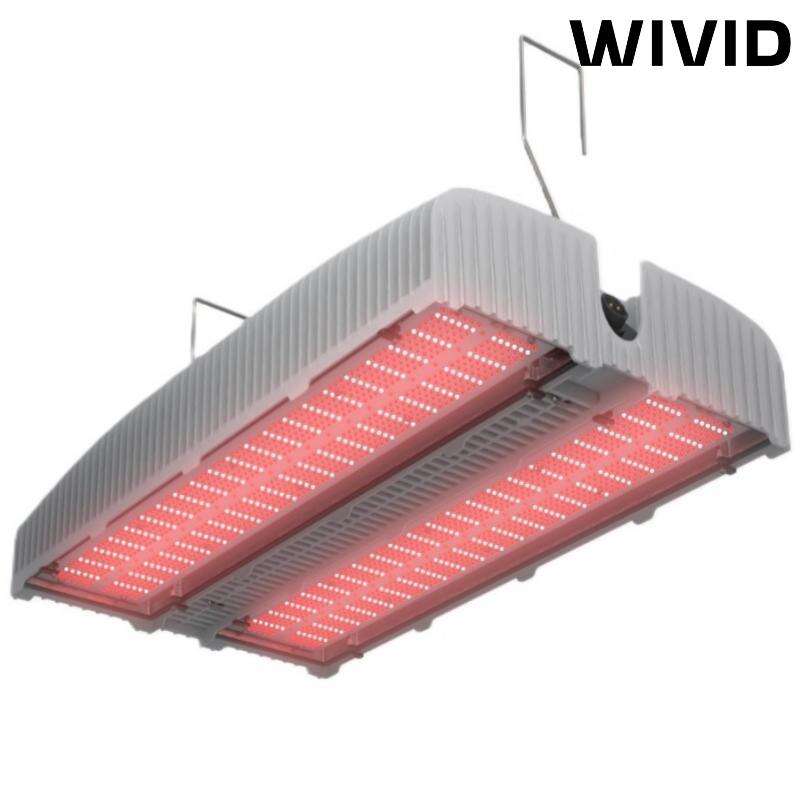
Greenhouse top lighting refers to artificial lighting fixtures installed above the plant canopy, designed to supplement or replace natural sunlight in greenhouse production environments. These systems are engineered to provide photosynthetically active radiation from an overhead position, mimicking the natural angle and intensity of sunlight. The primary objective of horticulture toplight installations is to ensure that crops receive adequate light energy for photosynthesis, regardless of seasonal variations, weather conditions, or geographic location. This lighting approach has become indispensable for commercial operations growing high-value crops such as tomatoes, cucumbers, peppers, leafy greens, and ornamental plants in controlled environments.
Fundamental Principles of Greenhouse Top Lighting Systems
Light Distribution Geometry and Canopy Coverage
The effectiveness of any horticulture toplight system depends heavily on how light is distributed across the growing area. Top-mounted fixtures are positioned at specific heights above the crop canopy to achieve optimal coverage and uniformity. The geometric arrangement of these lights follows systematic spacing patterns that account for beam angles, light intensity decay with distance, and the physical layout of the greenhouse structure. Professional installations typically calculate the mounting height based on the fixture's photometric distribution curve to ensure that adjacent light cones overlap sufficiently at the canopy level.
The spatial uniformity of light delivery is critical because uneven illumination leads to inconsistent crop development, with some plants receiving excessive light while others remain deficient. Advanced horticulture toplight designs incorporate optical elements such as reflectors, lenses, and diffusers to shape the light output and minimize dark spots or hotspots within the growing area. The goal is to achieve a uniformity ratio where the minimum light level is at least seventy to eighty percent of the maximum level across the canopy, ensuring that all plants experience comparable photosynthetic conditions.
Photosynthetic Photon Flux Density Requirements
Plants require specific quantities of photosynthetically active radiation, measured in photosynthetic photon flux density, to drive optimal growth and development. Different crop species and growth stages demand varying light intensities, which top lighting systems must deliver consistently. Leafy greens may thrive with moderate PPFD levels around two hundred to three hundred micromoles per square meter per second, while fruiting crops such as tomatoes benefit from higher intensities ranging from four hundred to six hundred micromoles or more during peak production phases.
The horticulture toplight fixtures selected for a greenhouse must possess sufficient output capacity to meet these target PPFD values at the canopy surface. System designers calculate the required number of fixtures and their electrical input power based on the crop's light demands, the greenhouse's light transmission characteristics, and the fixture's photosynthetic photon efficacy. This metric, expressed in micromoles per joule, indicates how efficiently the lighting system converts electrical energy into usable photons for plant growth. Higher efficacy values translate to lower operational costs and reduced thermal management challenges.
Spectral Composition and Plant Physiological Responses
Beyond intensity, the spectral quality of light emitted by top lighting systems profoundly influences plant morphology, biochemical composition, and developmental timing. The horticulture toplight spectrum typically emphasizes wavelengths in the blue region (four hundred to five hundred nanometers) and red region (six hundred to seven hundred nanometers), which correspond to the absorption peaks of chlorophyll molecules. Blue light regulates phototropism, stomatal opening, and compact growth habits, while red light drives photosynthetic efficiency and flowering responses in photoperiod-sensitive species.
Modern LED-based top lighting systems offer precise spectral control, allowing growers to tailor the light recipe to specific crop requirements and production objectives. Some applications benefit from the inclusion of far-red wavelengths (seven hundred to seven hundred fifty nanometers) to manipulate plant architecture through shade avoidance responses or accelerate flowering. Green light components, though less critical for photosynthesis, penetrate deeper into dense canopies and contribute to overall carbon assimilation in lower leaf layers. The spectral flexibility of contemporary horticulture toplight technologies enables growers to implement dynamic lighting strategies that adapt to different growth phases or market demands.
Operational Mechanisms Behind Top Lighting Performance
Light Source Technologies and Energy Conversion
The core component of any greenhouse top lighting system is the light source itself, which converts electrical energy into photons. Traditional horticulture toplight installations relied on high-pressure sodium lamps, which produce a yellow-orange spectrum rich in red wavelengths but deficient in blue content. These discharge lamps operate by passing electrical current through a pressurized gas mixture, exciting sodium atoms to emit characteristic radiation. While HPS lamps provide high lumen output at relatively low capital cost, they suffer from poor spectral quality, significant heat generation, and declining efficacy over their operational lifespan.
Light-emitting diode technology has emerged as the preferred light source for modern horticulture toplight applications due to its superior energy efficiency, spectral tunability, and extended service life. LEDs generate photons through electroluminescence in semiconductor materials, with minimal waste heat production compared to discharge lamps. The solid-state nature of LED chips enables precise optical control and compact fixture designs. Commercial LED top lighting systems achieve photosynthetic photon efficacy values exceeding three micromoles per joule, substantially higher than the efficacy of HPS alternatives. This efficiency advantage translates to reduced electricity consumption and lower cooling requirements in climate-controlled greenhouses.
Thermal Management and Environmental Integration
Although LED-based horticulture toplight fixtures generate less radiant heat than discharge lamps, they still produce thermal energy that must be dissipated to maintain optimal operating temperatures and maximize lifespan. Effective thermal management involves passive cooling through aluminum heat sinks with extended surface areas, active cooling using integrated fans, or liquid cooling systems for high-power installations. Proper thermal design ensures that junction temperatures within the LED chips remain below critical thresholds, preserving light output and preventing premature degradation.
The heat released by top lighting systems influences the greenhouse microclimate, affecting air temperature, vapor pressure deficit, and transpiration rates. In cooler climates or during winter months, the thermal contribution from lighting can reduce supplemental heating demands, improving overall energy efficiency. Conversely, in warm conditions or high-intensity lighting scenarios, excess heat must be removed through ventilation or active cooling to prevent heat stress in the crop. Advanced greenhouse climate control systems integrate horticulture toplight operation with heating, ventilation, and humidity management to maintain optimal growing conditions while minimizing energy waste.
Photoperiod Control and Developmental Regulation
Top lighting systems enable precise manipulation of photoperiod, the daily duration of light exposure, which is a critical environmental signal for many crop species. Photoperiodic responses govern reproductive transitions, with long-day plants requiring extended light periods to initiate flowering and short-day plants needing darkness thresholds to trigger reproductive development. By controlling when horticulture toplight fixtures activate and deactivate, growers can synchronize flowering timing, accelerate production cycles, or prevent unwanted bolting in vegetative crops.
The implementation of photoperiod strategies requires careful coordination with natural daylength patterns, particularly in greenhouses that receive significant natural light. Blackout curtains or supplemental lighting schedules extend effective daylength beyond natural sunset, while dawn and dusk simulation protocols can enhance plant quality through gradual light transitions. Sophisticated control systems monitor outdoor light levels and automatically adjust top lighting intensity and duration to maintain target daily light integrals, the cumulative amount of photosynthetically active radiation received over twenty-four hours. This metric directly correlates with biomass accumulation and yield potential across diverse crop types.
Technical Components and System Architecture
Fixture Design and Optical Engineering
A typical horticulture toplight fixture comprises multiple functional elements working in concert to deliver reliable performance. The housing structure provides mechanical support, environmental protection, and mounting interfaces for installation on greenhouse infrastructure such as trusses or cable suspension systems. Materials selection prioritizes corrosion resistance in high-humidity environments, with aluminum and stainless steel commonly employed for structural components. Ingress protection ratings indicate the fixture's resistance to moisture and particulate intrusion, with IP65 or higher classifications preferred for greenhouse applications.
The optical system within each top lighting fixture shapes and directs the light output to achieve desired distribution patterns. Reflector geometries redirect photons emitted at wide angles back toward the canopy, improving system efficiency. Lens arrays or secondary optics further control beam spread, with narrow angles creating concentrated illumination for tall crops and wide angles providing broader coverage in low-canopy applications. The optical design must balance coverage area with intensity, recognizing that wider distribution reduces peak intensity while narrower beams increase center-spot brightness. Premium horticulture toplight products employ computer-modeled optics to optimize the trade-off between uniformity and efficiency.
Electrical Architecture and Power Management
The electrical subsystem of a top lighting installation includes drivers, wiring infrastructure, and control interfaces that enable reliable operation and integration with greenhouse automation platforms. LED drivers convert alternating current from the utility supply to the direct current required by LED arrays, while also regulating output current to maintain stable light intensity. Driver efficiency directly impacts overall system performance, with high-quality units achieving conversion efficiencies above ninety-five percent. Dimming capability allows dynamic adjustment of light output, either through pulse-width modulation or constant-current reduction, enabling flexible light recipes and energy optimization.
Large-scale horticulture toplight installations require substantial electrical infrastructure to support hundreds or thousands of fixtures operating simultaneously. Electrical design considerations include wire sizing for voltage drop management, circuit protection devices, power factor correction, and harmonic mitigation. Three-phase power distribution is standard in commercial greenhouses to balance loads and improve efficiency. Centralized or distributed control architectures enable zone-based lighting management, where different greenhouse areas operate on independent schedules or intensity levels to accommodate varying crop types or growth stages within a single facility.
Control Systems and Automation Integration
Modern greenhouse top lighting systems integrate seamlessly with comprehensive climate control platforms that coordinate lighting, heating, cooling, irrigation, and carbon dioxide enrichment. Control strategies range from simple timer-based schedules to sophisticated algorithms that respond dynamically to measured environmental variables and crop feedback signals. Light sensors positioned at canopy height provide real-time data on actual photosynthetic photon flux density, enabling closed-loop control that compensates for variations in natural light availability or fixture performance degradation.
Advanced automation systems implement light sum tracking, continuously calculating the cumulative photosynthetic photon exposure and adjusting horticulture toplight intensity or duration to achieve predetermined daily light integral targets. This approach ensures consistent day-to-day light delivery regardless of weather fluctuations, promoting uniform crop development and predictable production schedules. Integration with weather forecasting data allows anticipatory adjustments, reducing supplemental lighting when clear conditions are expected or increasing intensity in advance of prolonged cloudy periods. Remote monitoring and control capabilities enable facility managers to supervise multiple greenhouse zones from centralized locations, optimizing labor efficiency and responding quickly to system alerts or operational anomalies.
Application Considerations and Performance Optimization
Crop-Specific Implementation Strategies
Different crop categories present unique requirements for horticulture toplight system design and operation. Vegetative leafy crops such as lettuce and herbs benefit from moderate to high light intensities with blue-enriched spectra that promote compact, intensely colored foliage. Top lighting installations for these crops typically operate continuously during photoperiods of sixteen to eighteen hours, delivering daily light integrals between fifteen and twenty moles per square meter per day. The relatively low canopy height of leafy greens allows for lower mounting heights and tighter fixture spacing patterns.
Fruiting vegetables including tomatoes, peppers, and cucumbers demand higher light intensities and greater total photon delivery to support reproductive development and fruit quality. These crops often occupy greenhouse space for extended periods, necessitating horticulture toplight systems capable of sustained high-output operation. Optimal performance typically requires daily light integrals exceeding twenty-five moles per square meter per day, with PPFD values at the canopy reaching five hundred micromoles or higher during peak production phases. The increased plant height in fruiting crops requires higher fixture mounting positions and consideration of light penetration into the mid and lower canopy layers.
Economic Performance and Return on Investment
The financial viability of greenhouse top lighting investments depends on multiple factors including capital costs, operational expenses, yield improvements, and crop value. Initial capital requirements encompass fixture procurement, electrical infrastructure, installation labor, and control system integration. LED-based horticulture toplight systems typically command higher upfront costs than traditional HPS alternatives, but this premium is offset by lower electricity consumption, reduced maintenance expenses, and extended service life. Comprehensive financial analysis must account for regional electricity rates, utility demand charges, and potential incentives for energy-efficient technologies.
Operational benefits include yield increases ranging from twenty to fifty percent compared to natural light-only production, crop quality enhancements reflected in improved color and shelf life, and expanded production windows that enable year-round cultivation in seasonal climates. These productivity gains translate to higher revenue per square meter of greenhouse space, accelerating payback periods. Energy consumption represents the dominant ongoing expense, with lighting systems potentially accounting for thirty to fifty percent of total facility electricity use. Strategies to minimize operational costs include selecting high-efficacy fixtures, implementing intelligent control algorithms that avoid unnecessary light delivery, and coordinating horticulture toplight operation with time-of-use electricity pricing structures.
Maintenance Requirements and Longevity Factors
Sustaining optimal performance from top lighting installations requires systematic maintenance protocols addressing both fixture-level and system-level concerns. LED-based horticulture toplight products typically offer rated lifetimes exceeding fifty thousand hours, but actual longevity depends on operating conditions, thermal management effectiveness, and environmental factors. Regular cleaning of optical surfaces prevents dust and debris accumulation that reduces light transmission efficiency. Accumulated contamination can decrease output by ten to twenty percent over several months in greenhouse environments with high particulate loads.
Monitoring programs track individual fixture performance, identifying units with declining output or failed components before widespread degradation impacts crop performance. Gradual lumen depreciation is inherent to all light sources, requiring periodic recalibration of control set points to maintain target PPFD levels as fixtures age. Electrical connections require inspection for signs of corrosion or loosening, particularly in high-humidity greenhouse conditions. Proactive maintenance extends system lifespan, preserves energy efficiency, and prevents unexpected failures during critical production periods when lighting is essential for crop success.
FAQ
What is the primary difference between horticulture toplight and other greenhouse lighting positions?
Horticulture toplight systems are mounted above the crop canopy to deliver illumination from overhead, mimicking natural sunlight angles and providing uniform coverage across large growing areas. This positioning differs from interlighting, which places fixtures within the canopy to illuminate lower leaf layers, and underlighting, which illuminates from below. Top lighting provides the most efficient light delivery for most crop types because it follows the natural phototropic orientation of plant leaves and enables straightforward installation on existing greenhouse structures.
How do greenhouse operators determine the appropriate intensity for their horticulture toplight system?
Light intensity requirements are determined by the specific crop species, growth stage, and production objectives. Operators consult research literature and industry guidelines to identify target photosynthetic photon flux density values for their crops, then calculate the number and spacing of fixtures needed to achieve those intensities at canopy height. This calculation accounts for the greenhouse's natural light transmission, target daily light integral, and the photosynthetic photon output of selected fixtures. Most commercial operations aim for intensities between three hundred and six hundred micromoles per square meter per second, with adjustments based on seasonal light availability and economic considerations.
Can horticulture toplight systems completely replace natural sunlight in greenhouse production?
While technically feasible, complete replacement of natural sunlight with artificial top lighting is typically economically impractical except in specialized applications such as vertical farms or climate zones with extremely limited sunlight. Most commercial greenhouses employ horticulture toplight as supplemental illumination, activating during periods of insufficient natural light such as early morning, late afternoon, or overcast days. This hybrid approach leverages free solar radiation when available while ensuring consistent daily light delivery through artificial supplementation. Advanced control systems seamlessly blend natural and artificial light sources to optimize both crop performance and energy efficiency.
What maintenance schedule should be followed for greenhouse top lighting installations?
Recommended maintenance protocols include monthly visual inspections of fixtures for physical damage or contamination, quarterly cleaning of optical surfaces with appropriate non-abrasive methods, and semi-annual detailed inspections of electrical connections and mounting hardware. Annual professional assessments should verify light uniformity through canopy-level measurements, evaluate fixture performance against baseline specifications, and update control system calibrations as needed. Documentation of all maintenance activities enables tracking of system performance trends and informed decisions regarding fixture replacement timing. Facilities operating horticulture toplight systems in high-dust or high-humidity environments may require more frequent interventions to maintain optimal output levels.
Table of Contents
- Fundamental Principles of Greenhouse Top Lighting Systems
- Operational Mechanisms Behind Top Lighting Performance
- Technical Components and System Architecture
- Application Considerations and Performance Optimization
-
FAQ
- What is the primary difference between horticulture toplight and other greenhouse lighting positions?
- How do greenhouse operators determine the appropriate intensity for their horticulture toplight system?
- Can horticulture toplight systems completely replace natural sunlight in greenhouse production?
- What maintenance schedule should be followed for greenhouse top lighting installations?